About Us
25 Years of Achievements
Watch the video
The District issued community considerations and guidance on data centers planning in response to a significant increase in data center development across the region.
The District received the Alliance for Water Efficiency’s “Affiliate Member of the Year” award recognizing outstanding achievements and impacts of its members.
The District’s toilet and smart leak detector rebate programs sunset Dec. 31. Since it began in 2008, the program has supported replacement of more than 150,000 inefficient toilets with low-flow and high-efficiency models.
Recognized by the EPA for continued support and participation in water efficiency education through WaterSense®.
Effective January 1, 2024, revised indoor and outdoor efficiency codes require all newly constructed and renovated residential and multi-family properties in the District to install water-efficient fixtures with a projected savings of up to 23,000 gallons per home annually.
Atlanta Regional Commission received a $1.5M federal PROTECT Grant to create metro Atlanta’s first Resilience Improvement Plan, addressing areas in the region’s transportation system vulnerable to natural hazards like flooding, extreme temperatures, and drought.
Georgia Public Broadcasting partnered with the District to develop a Georgia Water Virtual Learning Journey interactive experience aligned to the state’s curriculum Standards of Excellence and designed to educate students (grades 3-8) about all aspects of water in Georgia.
Enhanced communications by launching a new quarterly Water Works e-newsletter to keep the region updated on news, water conservation tips, and resources and expanding the My Drop Counts Business Pledge — adding resources to help businesses conserve water in the workplace.
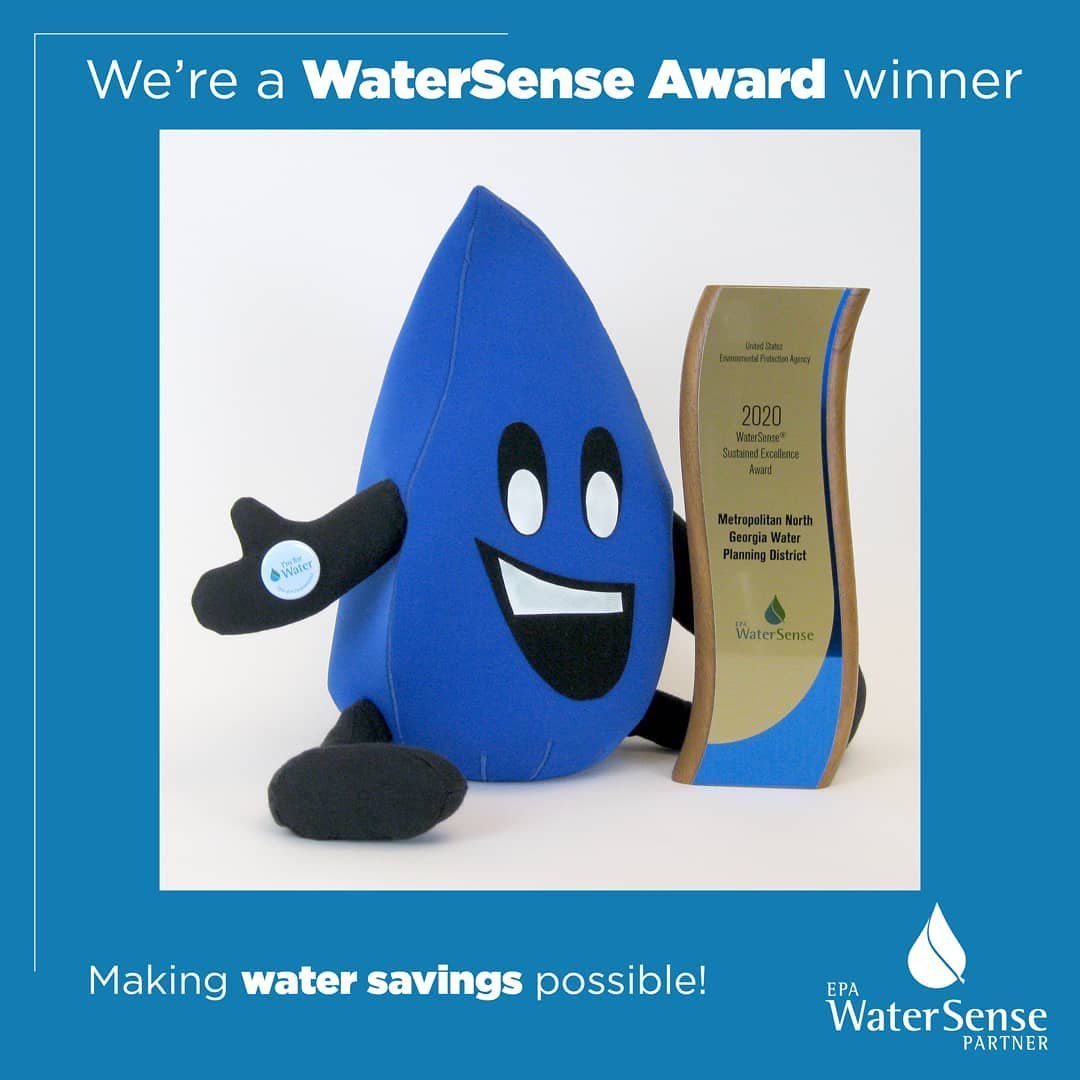
The District received its seventh WaterSense® Sustained Excellence Award and 10th award overall from the Environmental Protection Agency.
Created a Smart Leak Detection Rebate Program to help homeowners identify and prevent costly and damaging leaks.
Launched a Stormwater Forecast Script Tool to automate the process of calculating planning-level estimates of stormwater runoff volumes.
Refreshed the District’s website with a new design and additional resources and tools for partners and the general public to help plan, conserve and protect the region’s water.
Environmental Protection Agency (EPA) recognized the District for 15 years as a WaterSense® partner and with a 6th consecutive Sustained Excellence Award for promoting water efficiency and the WaterSense program.
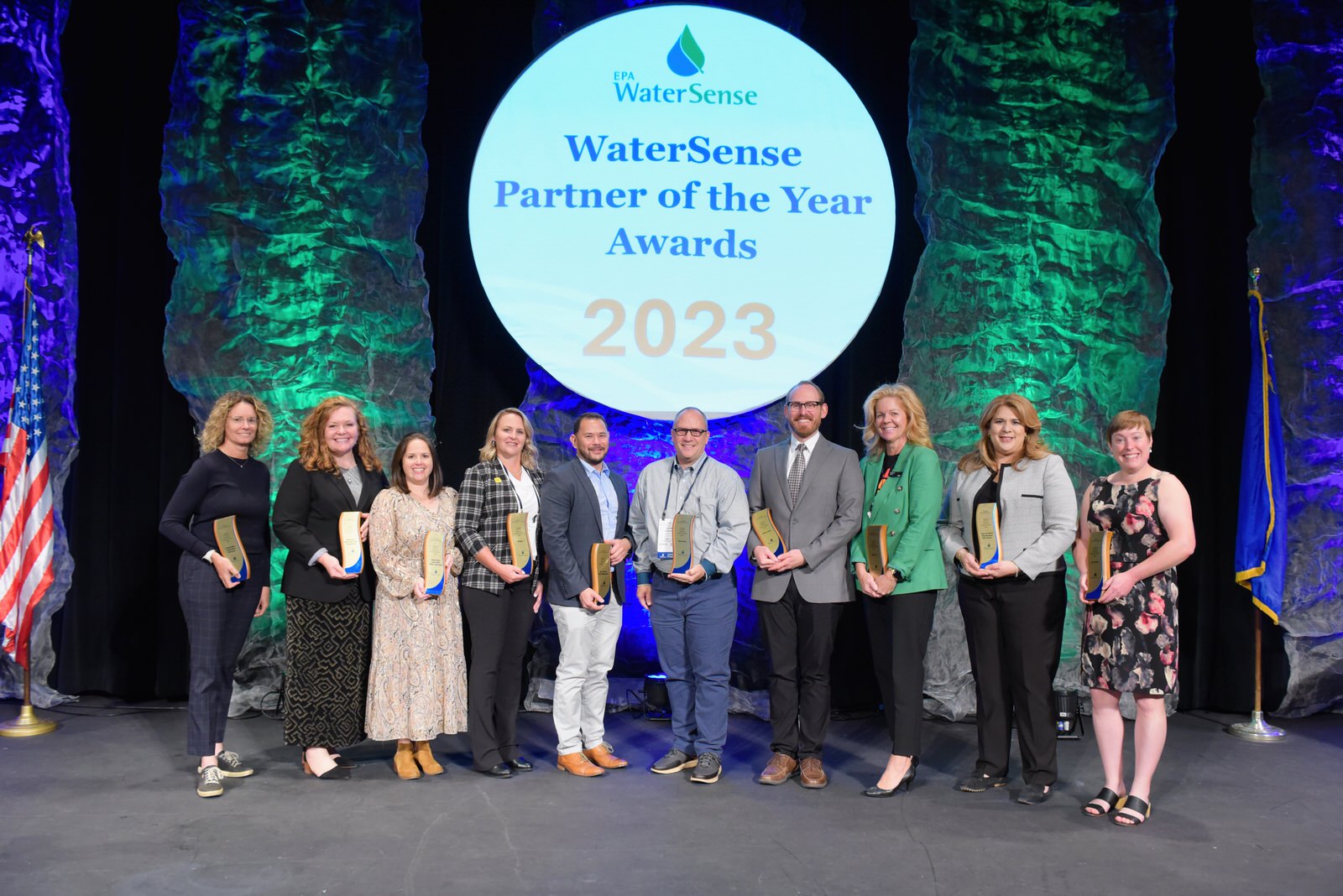
The Metro North Georgia Water Planning District has repeatedly been recognized by the EPA and received its fifth WaterSense® Sustained Excellence Award in 2022.
District Governing Board adopted the 2022 Water Resources Management Plan.
Developed interactive online River Basin Profiles providing a high-level perspective on watershed conditions for each of the District’s nine major river basins to help reinforce the one-water management approach and guide local planning.
Created a Drought Planning Guide, one-stop packet of utility resources, as a time-saving resource for local water providers to promote a coordinated, effective, and regionally consistent approach to drought response.
The U.S. Supreme Court ruled in Georgia’s favor regarding its water use in the Apalachicola-Chattahoochee-Flint Basin.
District embarked on innovative stormwater forecasting for the 2022 Plan update that will guide planning to promote holistic watershed and stormwater management for resilience, public safety, and watershed health.
Hosted Live Exploration: Georgia’s Water in partnership with Georgia Public Broadcasting, educating over 81,000 kids, teachers, and parents across our state and beyond.
Updated Source Water Assessment Plans (SWAPs) for 26 water providers, 39 water supply watersheds, and 42 public drinking water intakes that will help utilities identify potential sources of contamination to their drinking water supplies.

In response to the pandemic, the District hosted the first-ever VIRTUAL Water Drop Dash 5K with over 250 participating at their own pace during EPA WaterSense® Fix a Leak Week.
To address emerging issues, the District undertook new studies and pilot projects, including the Septic System Impacts to Surface Water Quality Study and Residential New Homes Water Use Study.
Updated Post-Construction Stormwater Management Ordinance safeguards public health and protects water resources.
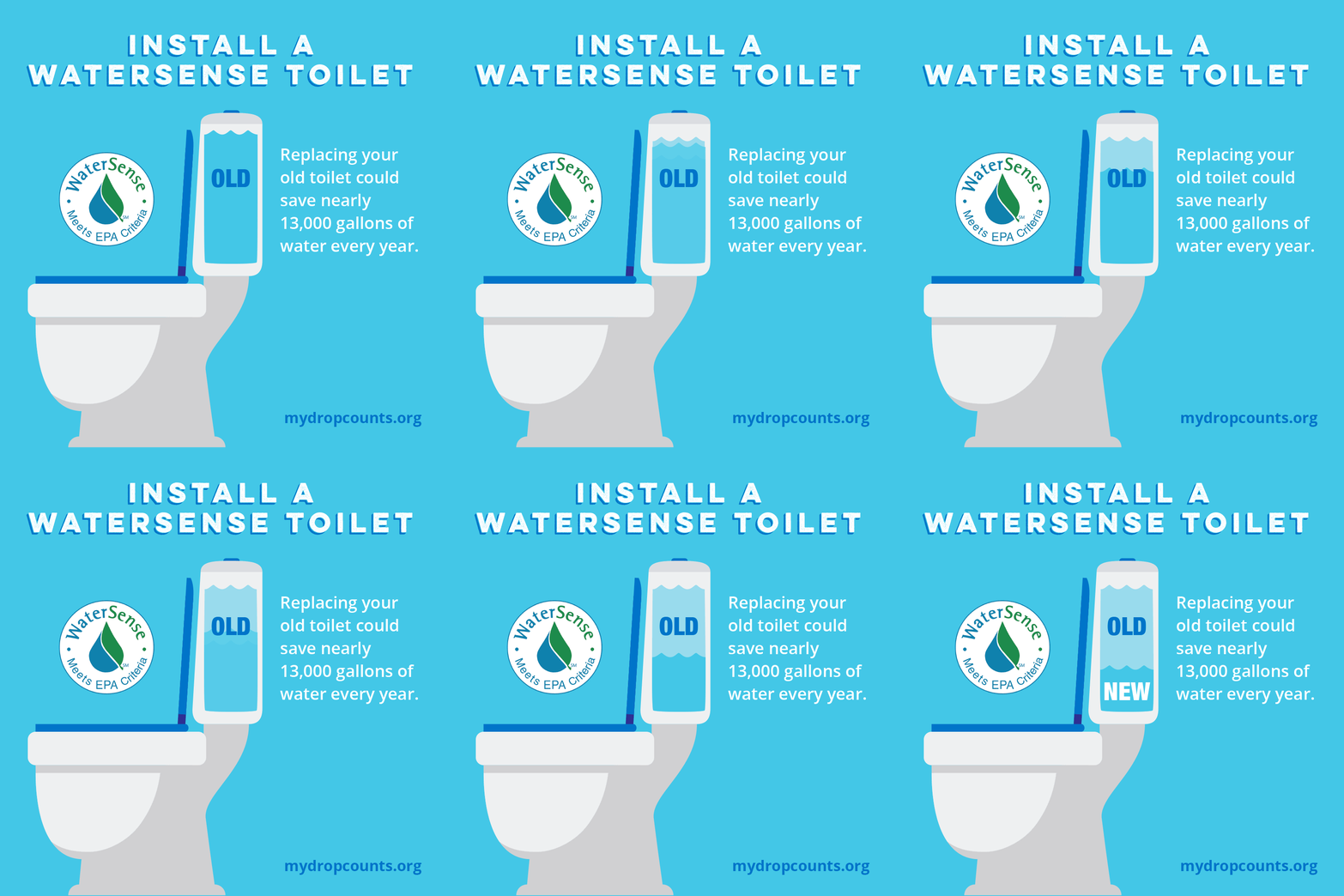
Enhanced the Toilet Rebate Program to include multi-family properties and improve water efficiency in multifamily residential dwellings.
Relaunched My Drop Counts Business Pledge and expanded the Home Pledge to include residents statewide.
District received its first U.S. EPA WaterSense® Sustained Excellence Award.
District launched the Society of Intentionally Dry Lawns during major Level 2 drought.
District Governing Board adopted the first Integrated Water Resource Management Plan including over 50 action items to protect and conserve the region’s shared water resources.
Launched the successful Septic Trainings for Realtors.
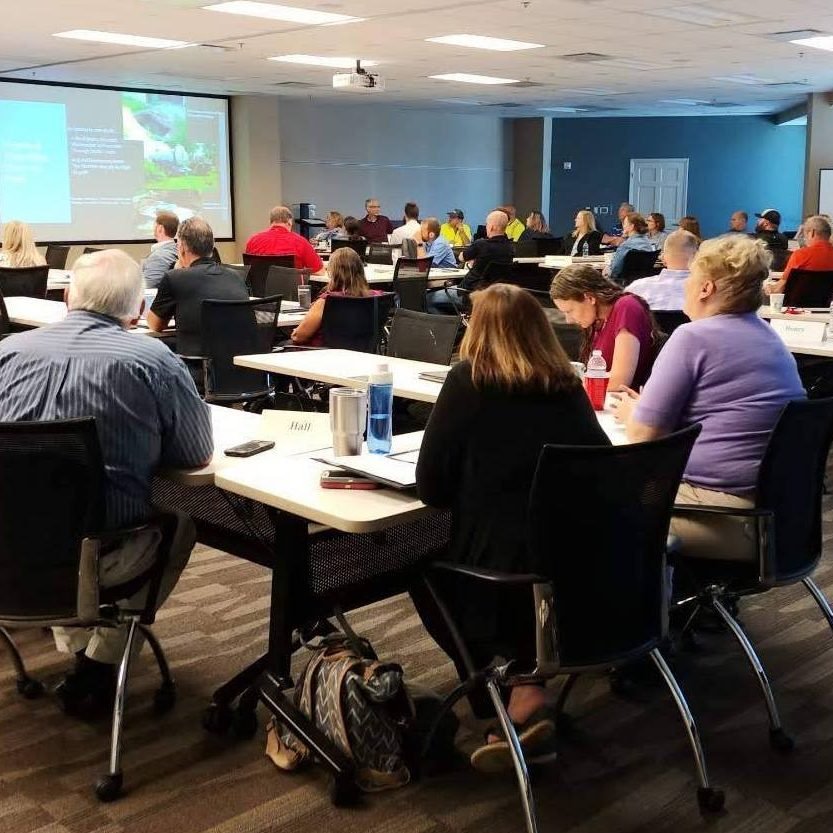
District launched its Technical Assistance Program for local governments, utilities and authorities.
Rebranded the District with a new, modern logo.
District partner utilities reached the collective milestone of replacing 100,000 toilets.
District initiated a Climate Resiliency Study to inform the Plan update.
District staff began working with stakeholders on the second update of regional Plans.
Celebrated 15 years with inaugural STREAM Awards for Programs and Projects of Excellence.
Projected water demands for 2050 decreased significantly compared to previous projections.
District hosted its first annual Water Drop Dash 5K Race and Festival.

District hosted its first annual Legislative Breakfast at the State Capitol.
District launched My Drop Counts, a water conservation campaign to encourage water saving in homes, schools and businesses in the metro area.
Held first joint meeting of the region’s six Basin Advisory Councils.
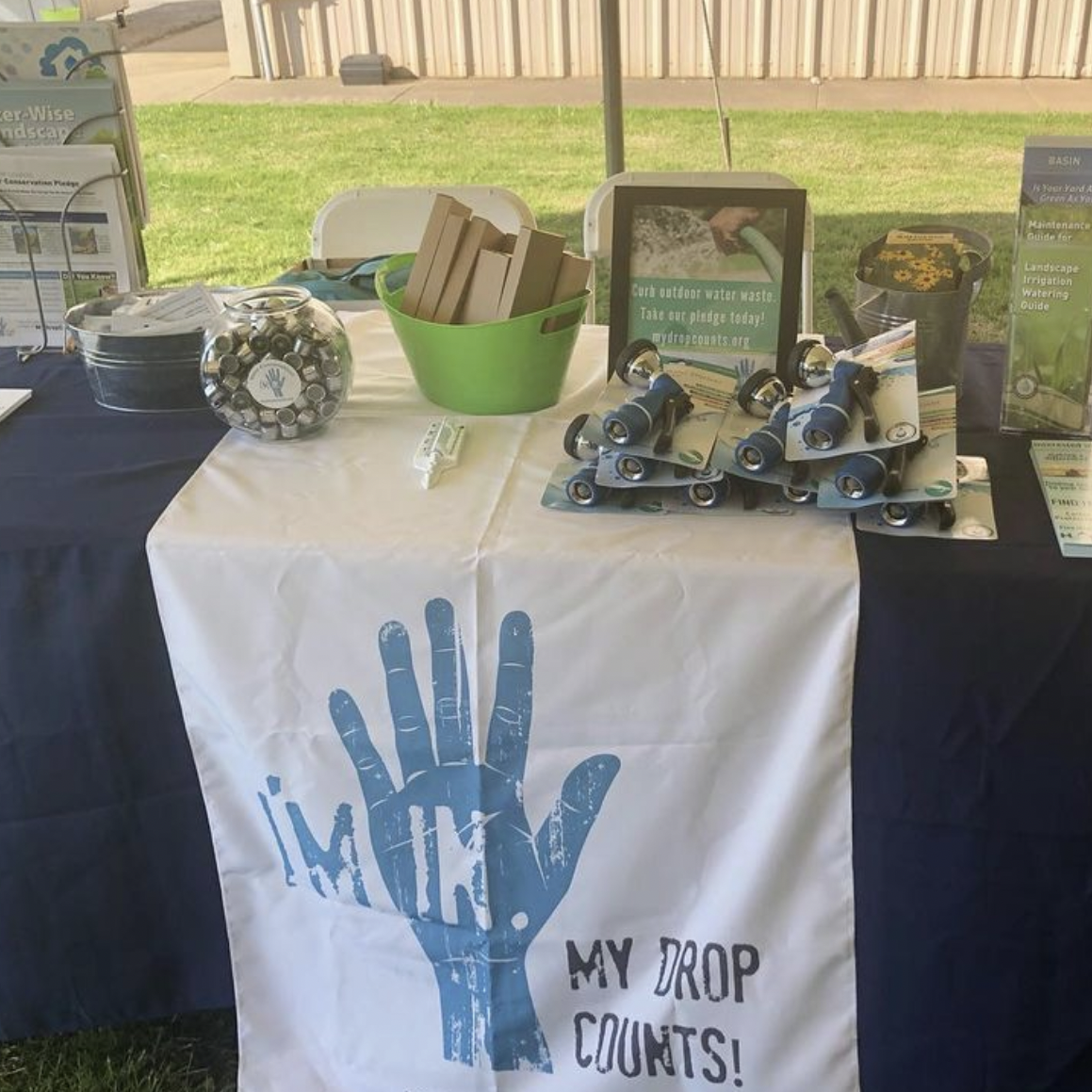
The Georgia Water Stewardship Act is signed, requiring all local governments to adopt or amend local ordinances to uniformly restrict outdoor water use for landscapes between 10 a.m. and 4 p.m., as well as updating the local plumbing code to include WaterSense® labeled high-efficiency fixtures.
Water Supply / Water Conservation Plans amended to include additional conservation measures for the Lanier and Chattahoochee basins.
Initiated the first update of the regional Plans, which included additional conservation measures.
Major flooding event impacted the region, highlighting the variability of metro Atlanta’s rainfall.
Toilet Rebate Program created to encourage replacement of inefficient, water-guzzling toilets.

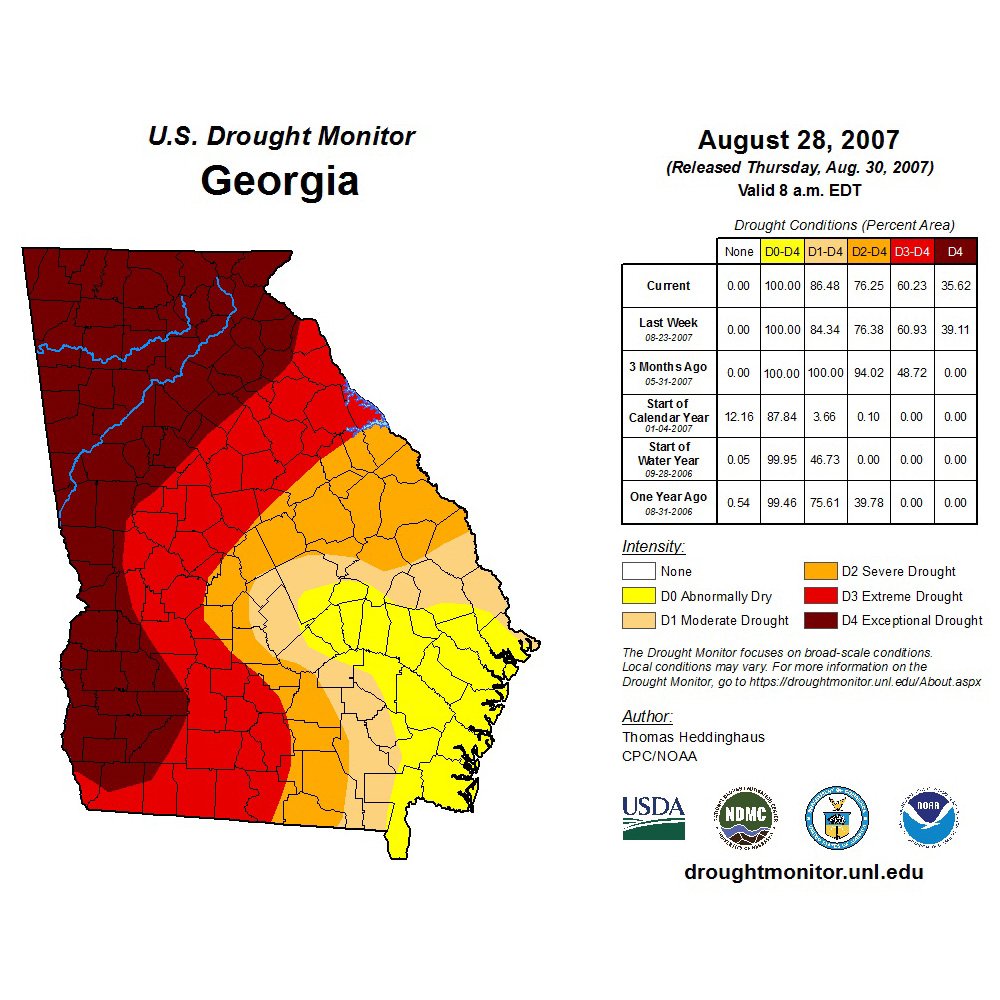
Major drought changed how local utilities and authorities think about their water supply and also changed customer water-use behaviors.
All local governments in the District required to adopt the suite of five model stormwater ordinances.
District began to look critically at planning for septic systems in the metro area.
Long-term management plans launched into action by the District’s partner utilities, authorities and jurisdictions.
Georgia General Assembly passed the Comprehensive Water Management Planning Act, charging the Georgia Environmental Protection Division with drafting the first comprehensive statewide water plan.
First suite of long-term management plans created to address Water Supply and Water Conservation, and Wastewater and Stormwater Management.
First Short-term Wastewater Plan created to address immediate concerns with wastewater management capacity in the region.
Metropolitan North Georgia Water Planning District created by the Georgia General Assembly (SB 130).